
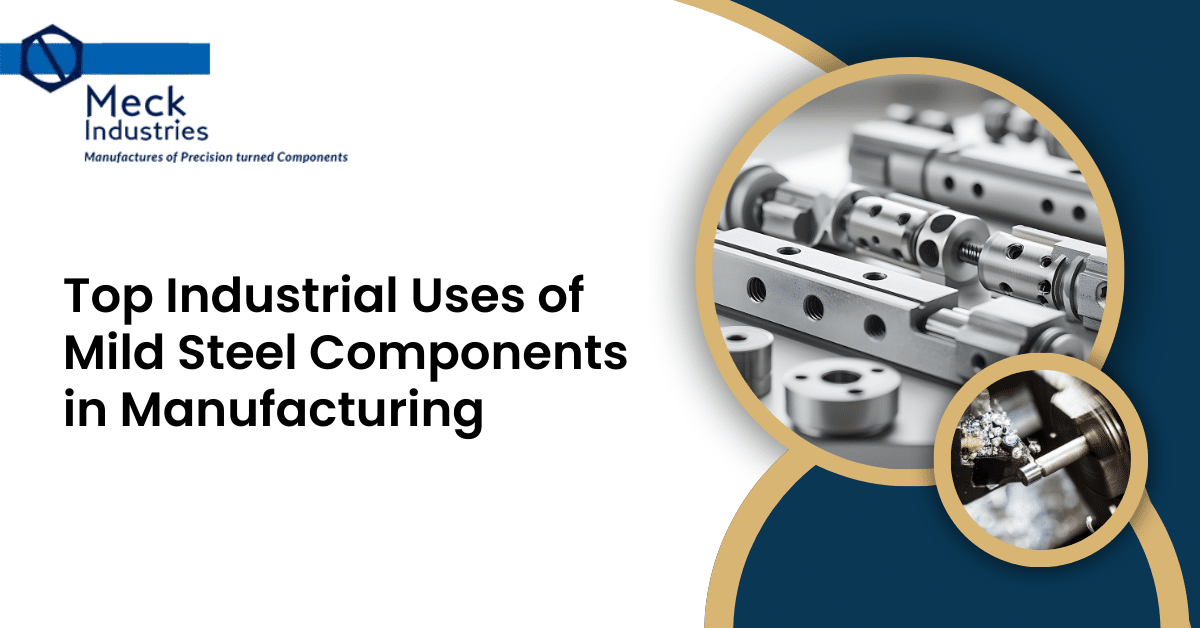
Mild steel has remained one of the most widely used engineering materials for decades because of its exceptional balance of strength, machinability, weldability, and affordability. From heavy industrial machinery to precision-engineered components, mild steel plays a critical role in supporting manufacturing operations across various sectors.
As industries continue to demand reliable and cost-effective materials, Mild Steel Components have become the preferred choice for producing durable parts that meet high-performance requirements. Their versatility allows manufacturers to create custom components for a wide range of industrial applications while maintaining production efficiency and cost control.
In this article, we’ll explore the major industrial uses of mild steel components, their advantages, and why they remain indispensable in today’s manufacturing industry.
What Are Mild Steel Components?
Mild steel components are precision-engineered parts manufactured from low-carbon steel, typically containing between 0.05% and 0.25% carbon. This composition gives the material excellent ductility, easy machinability, and good weldability while providing sufficient strength for most industrial applications.
These components are produced using various manufacturing processes such as:
- CNC Turning
- CNC Milling
- Precision Machining
- Drilling
- Tapping
- Welding
- Fabrication
- Surface Finishing
Depending on customer requirements, mild steel components can also undergo treatments such as zinc plating, powder coating, black oxide coating, galvanizing, or painting to improve corrosion resistance and appearance.
Why Mild Steel Is Widely Used in Manufacturing
Manufacturers across the globe continue to choose mild steel because it offers numerous practical advantages.
Some of its key benefits include:
- High strength-to-cost ratio
- Excellent machinability
- Easy welding and fabrication
- Good ductility and formability
- High dimensional accuracy
- Suitable for CNC machining
- Readily available raw material
- Easy customization
- Long service life with proper surface treatment
These characteristics make mild steel suitable for both standard and customized industrial components.
Top Industrial Applications of Mild Steel Components
1. Automotive Industry
The automotive sector extensively uses mild steel components due to their strength, durability, and cost-effectiveness.
Common applications include:
- Engine brackets
- Mounting plates
- Suspension components
- Chassis parts
- Gearbox housings
- Steering assemblies
- Support brackets
- Fasteners
Precision-machined mild steel parts help manufacturers maintain structural integrity while keeping production costs under control.
2. Industrial Machinery
Industrial machinery requires components capable of handling continuous operation and heavy mechanical loads.
Mild steel is commonly used for manufacturing:
- Machine frames
- Shafts
- Bushes
- Couplings
- Flanges
- Rollers
- Brackets
- Mounting fixtures
Its excellent machinability enables manufacturers to produce complex precision components with tight tolerances.
3. Construction Equipment
Construction machinery operates in demanding environments where durability is essential.
Mild steel components are widely used in:
- Excavators
- Loaders
- Cranes
- Concrete equipment
- Material handling systems
- Structural supports
- Fabricated assemblies
Their strength and ease of fabrication make them suitable for heavy-duty applications.
4. Electrical and Engineering Equipment
Many electrical and industrial engineering products use precision mild steel parts for structural and mounting purposes.
Applications include:
- Control panels
- Electrical enclosures
- Mounting brackets
- Cable support systems
- Transformer components
- Equipment frames
These parts provide mechanical stability while allowing easy fabrication and assembly.
5. Agricultural Machinery
Agricultural equipment operates under harsh working conditions and requires durable components that can withstand repeated impact and heavy usage.
Typical mild steel parts include:
- Tractor components
- Cultivator parts
- Harvester assemblies
- Equipment brackets
- Hitch components
- Mounting plates
Their durability and cost-effectiveness make them ideal for agricultural machinery.
6. Material Handling Equipment
Factories and warehouses depend on material handling systems that require strong fabricated components.
Mild steel is used in manufacturing:
- Conveyor structures
- Roller assemblies
- Storage racks
- Industrial trolleys
- Lifting equipment
- Pallet handling systems
These components provide reliable performance in continuous production environments.
7. Oil and Gas Industry
The oil and gas sector uses mild steel components in applications where strength and fabrication flexibility are important.
Examples include:
- Pipe supports
- Structural brackets
- Flanges
- Equipment frames
- Pump components
- Industrial fixtures
Appropriate protective coatings further enhance corrosion resistance for these environments.
8. General Engineering and Fabrication
General engineering workshops rely heavily on mild steel for manufacturing custom components.
Typical products include:
- Precision machined parts
- Fabricated assemblies
- Custom brackets
- Mounting plates
- Industrial fixtures
- Machine guards
- Support structures
Its versatility allows manufacturers to produce both prototypes and high-volume production parts efficiently.
Advantages of Using Mild Steel Components
Choosing mild steel components offers several long-term benefits for manufacturers:
Cost-Effective Production
Mild steel is significantly more economical than many alloy or stainless steels, helping businesses reduce manufacturing costs.
Excellent Machinability
Its low carbon content allows faster machining with reduced tool wear, improving production efficiency.
Easy Fabrication
Mild steel can be cut, drilled, welded, and formed with ease, making it ideal for customized industrial applications.
Reliable Mechanical Performance
It provides a dependable combination of strength, toughness, and ductility for a wide range of industrial uses.
Wide Availability
Mild steel is readily available in multiple grades and sizes, making procurement easier and reducing production delays.
Factors to Consider When Selecting Mild Steel Components
When sourcing precision mild steel components, consider:
- Material grade
- Dimensional accuracy
- Surface finish
- Machining tolerance
- Load-bearing requirements
- Corrosion protection
- Heat treatment requirements
- Production volume
- Quality inspection standards
Working with an experienced manufacturer ensures every component meets the required technical specifications.
Why Choose Meck Industries?
Meck Industries manufactures high-quality precision mild steel components for customers across diverse industries.
Our capabilities include:
- Precision CNC Turning
- CNC Milling
- Custom Machining
- Threading
- Drilling and Tapping
- Surface Finishing
- Prototype Development
- Bulk Production
Every component undergoes stringent quality inspection to ensure dimensional accuracy, durability, and consistent performance.
Whether you need standard parts or custom-designed components, our experienced engineering team delivers reliable manufacturing solutions tailored to your exact requirements.
Frequently Asked Questions
Why are mild steel components widely used in manufacturing?
Mild steel offers an excellent balance of strength, machinability, weldability, and affordability, making it suitable for a wide variety of industrial applications.
Which industries use mild steel components?
Automotive, construction, industrial machinery, agriculture, electrical equipment, oil and gas, material handling, and general engineering industries all depend on mild steel components.
Can mild steel components be customized?
Yes. Mild steel components can be manufactured according to customer drawings, dimensions, tolerances, and surface finish requirements using CNC machining and fabrication processes.
How can corrosion resistance be improved?
Protective finishes such as zinc plating, galvanizing, powder coating, black oxide, or painting help improve corrosion resistance and extend service life.
Mild steel components continue to be one of the foundations of modern manufacturing due to their versatility, strength, ease of fabrication, and economic value. From automotive assemblies and industrial machinery to construction equipment and engineering products, they provide dependable performance across countless applications.
Choosing a trusted manufacturing partner is equally important. With advanced CNC machining, strict quality control, and customized manufacturing capabilities, Meck Industries delivers precision mild steel components that meet the demanding requirements of today’s industries while ensuring reliability, consistency, and long-term performance.
